Sense
Acquire the race car’s existing brake-pressure signal without disrupting the vehicle’s electronics.
Independent engineering project · 2024—Present
A physical-AI driver-coaching system that transforms brake pressure, GPS position, and session history into real-time feedback and personalized post-session analysis.
One system, built across the full stack.
The engineering problem
Brake pressure is abstract. A coach can prescribe a target, but the driver has no direct reference for translating that number into pedal force while managing a corner at speed.
Brake Buddy closes that loop. It observes the car, understands where it is, gives the driver immediate visual feedback, and preserves the session for analysis after the car returns to the paddock.
Acquire the race car’s existing brake-pressure signal without disrupting the vehicle’s electronics.
Combine pressure with GNSS position to identify the active track, lap, corner, and braking zone.
Translate live data into intuitive LED feedback against a corner-specific pressure target.
Turn logged sessions into reports, history, and driver-specific AI-assisted coaching.
System architecture
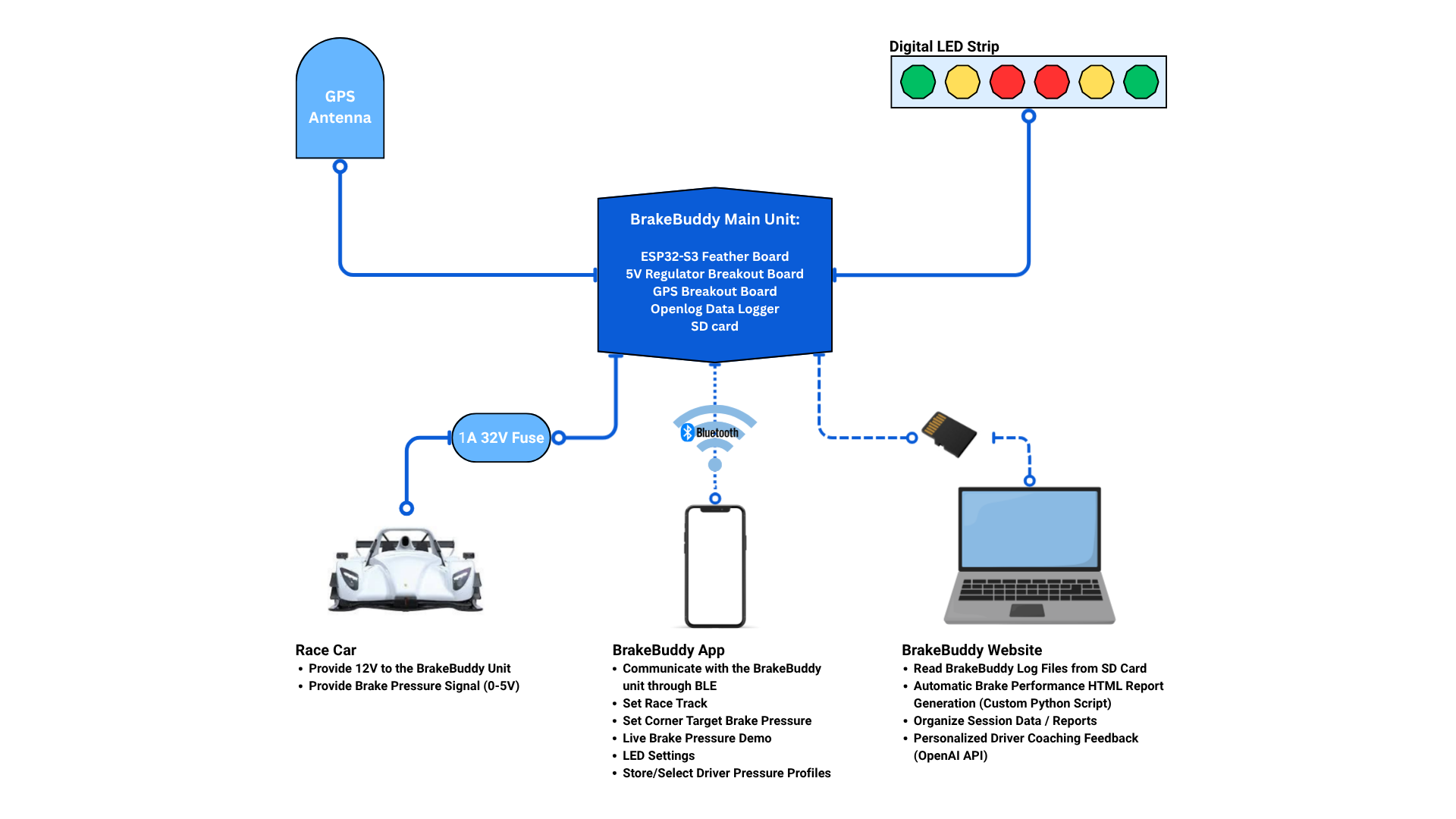
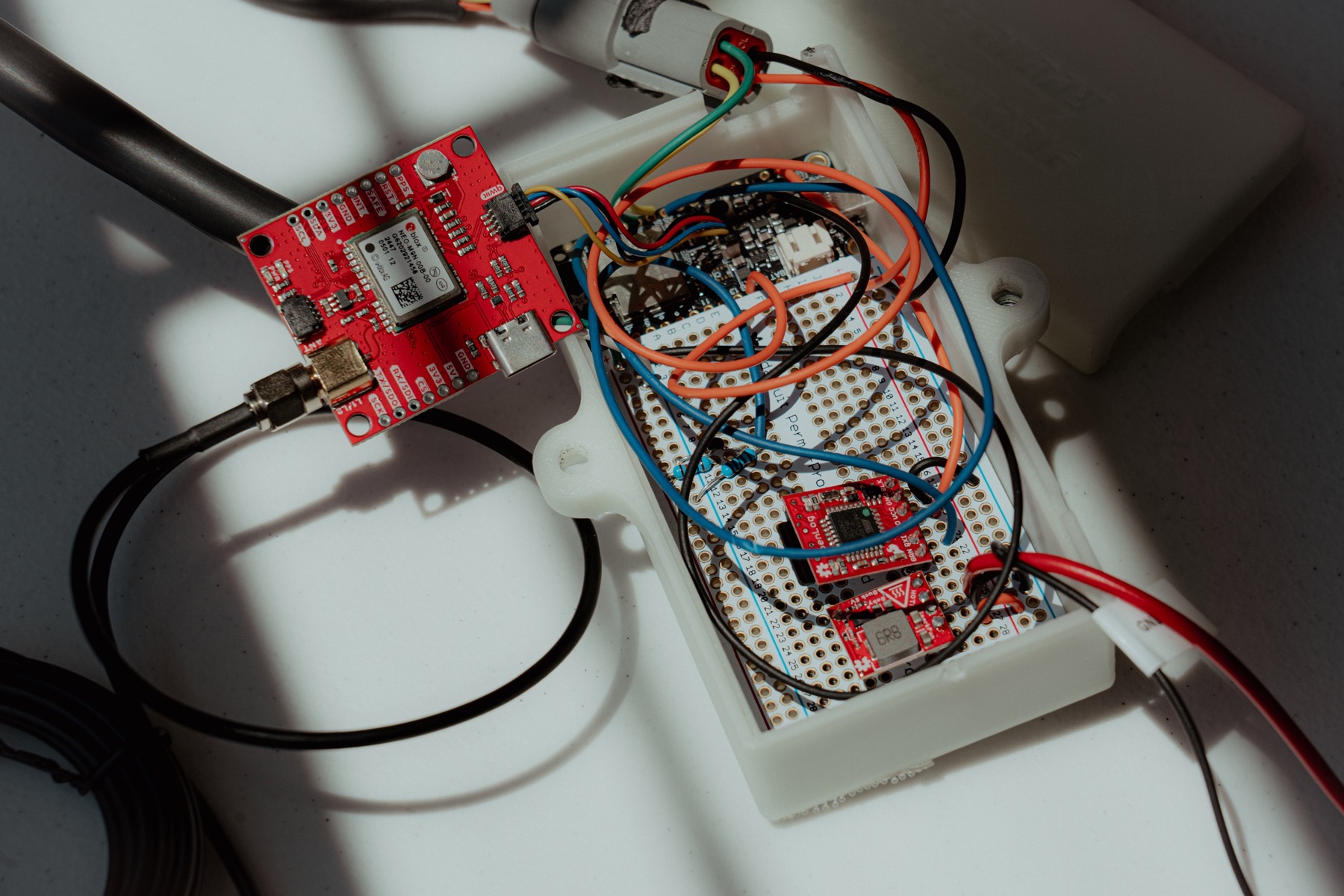
A fused vehicle interface feeds a custom ESP32-S3 system. GNSS adds track context, BLE exposes configuration, and the SD-card workflow carries session data into the local analysis platform.
Real-time driver feedback
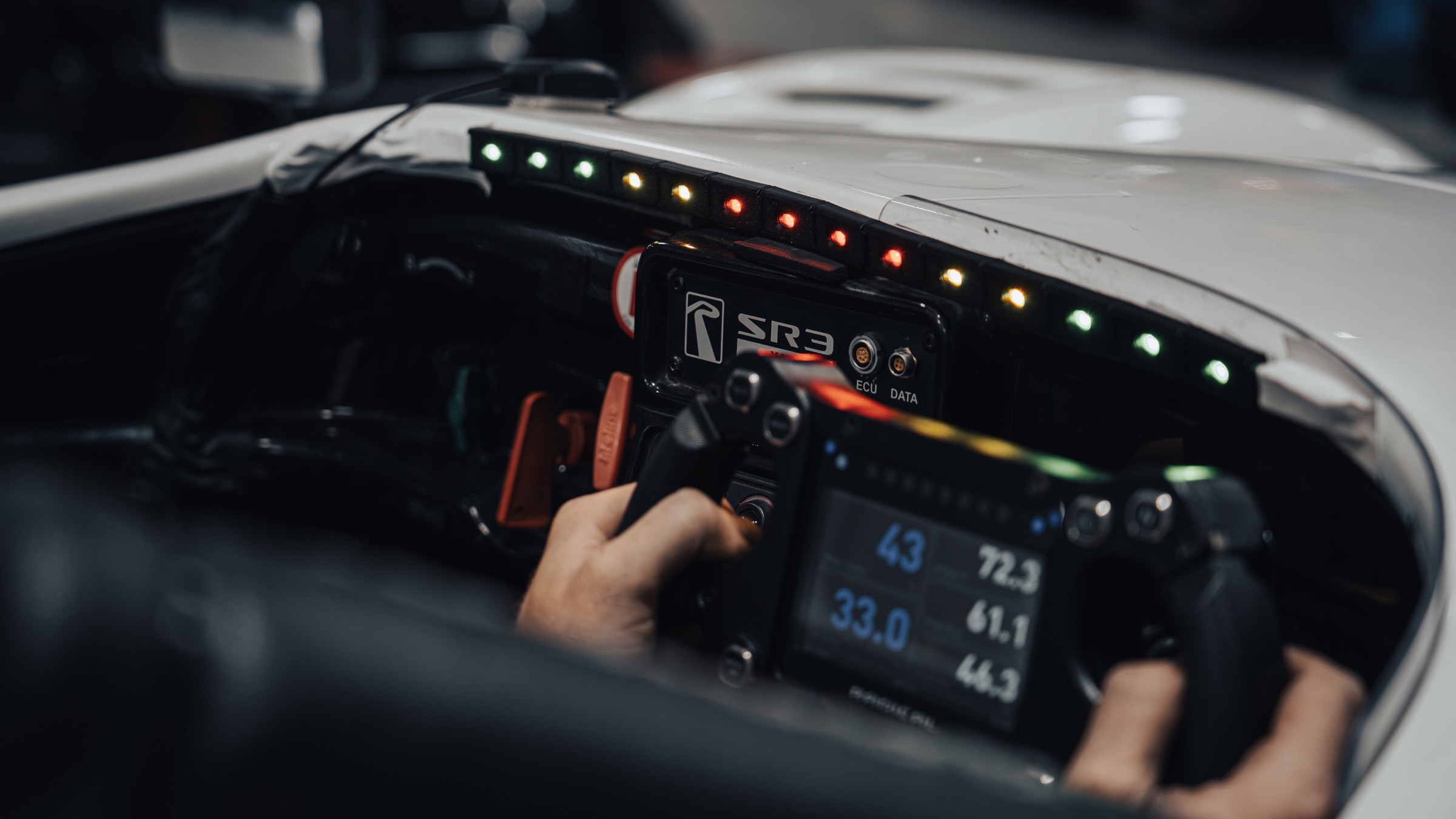
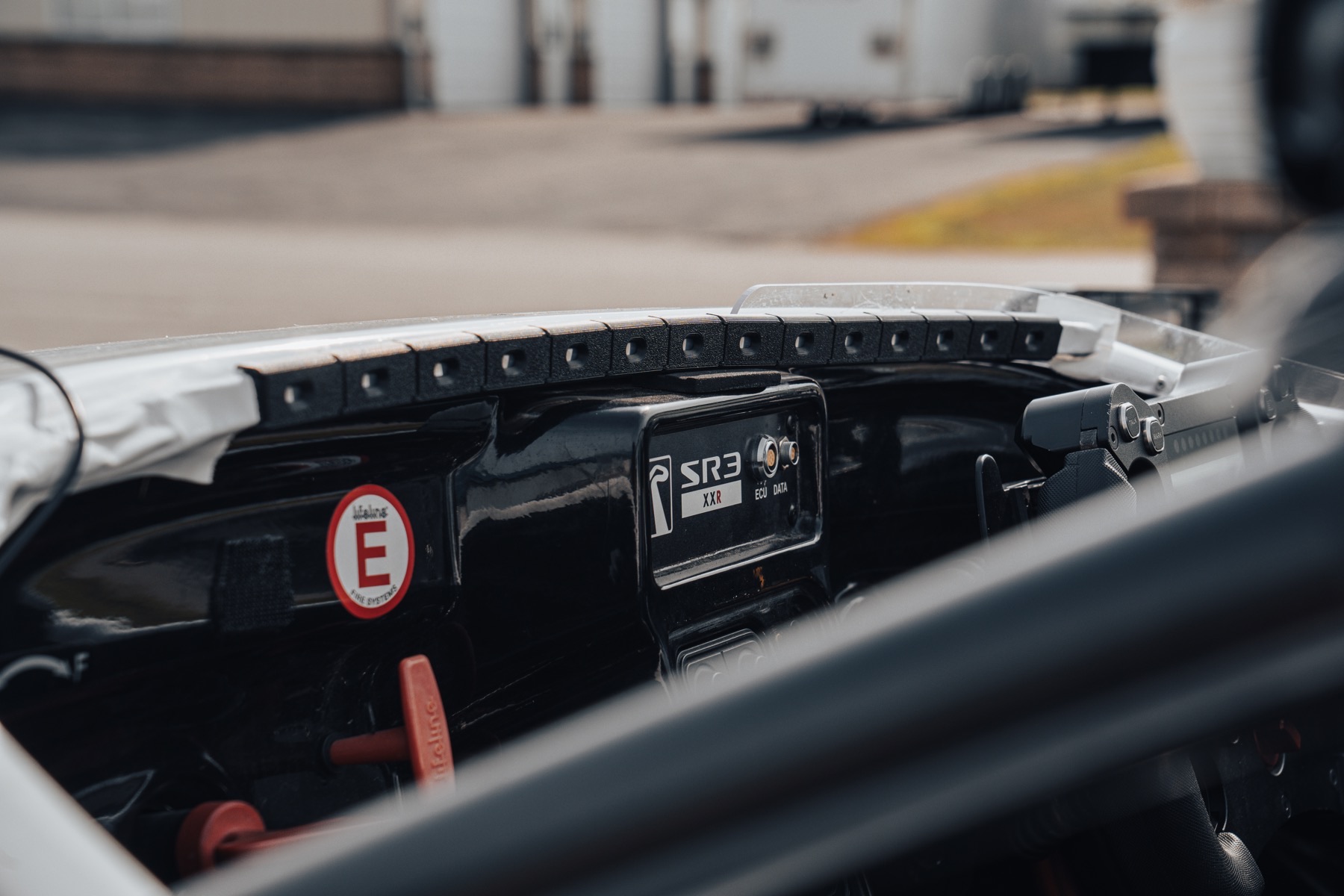
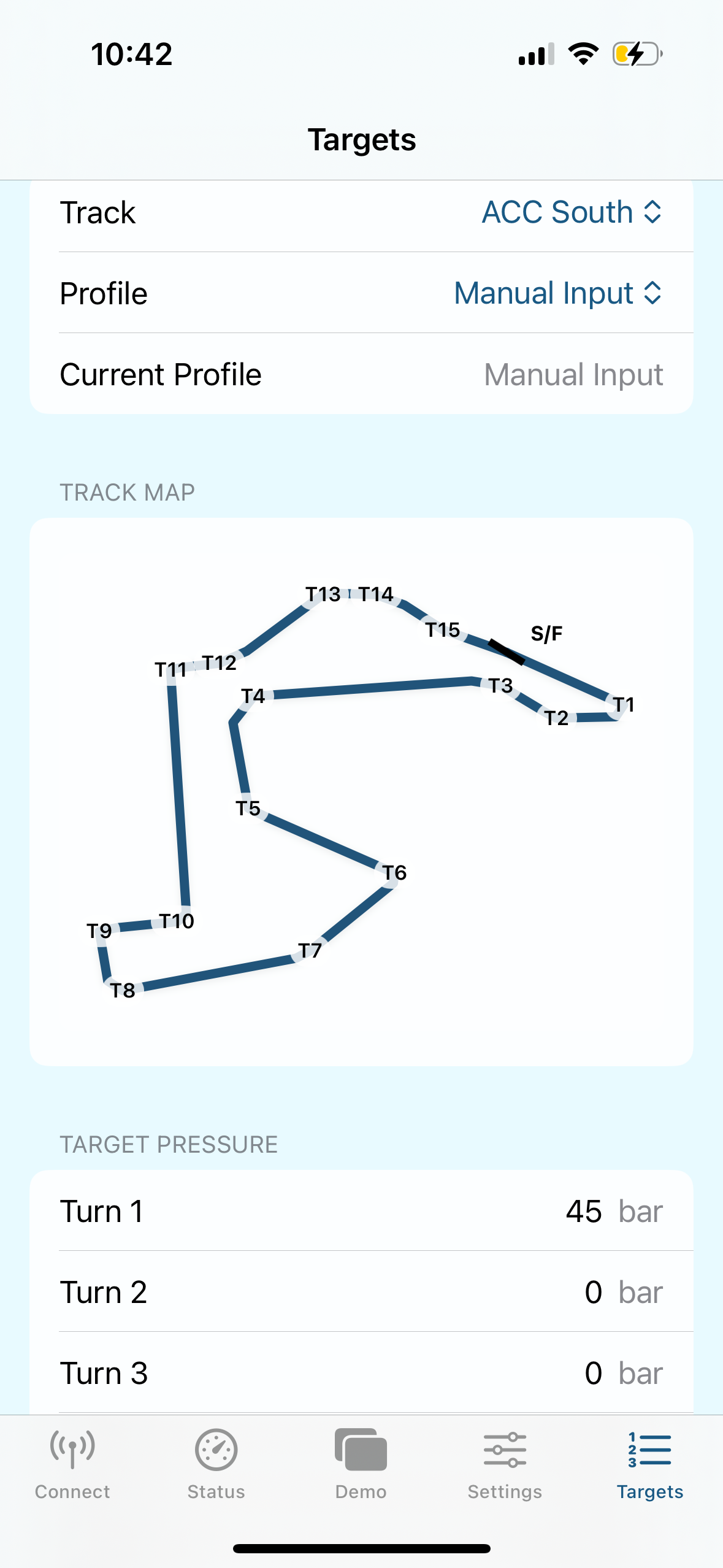
GNSS positioning identifies the car’s active braking zone and automatically loads the preset pressure target for that corner. The LED bar adapts corner by corner, so the driver never has to memorize a pressure number or how many lights to fill.
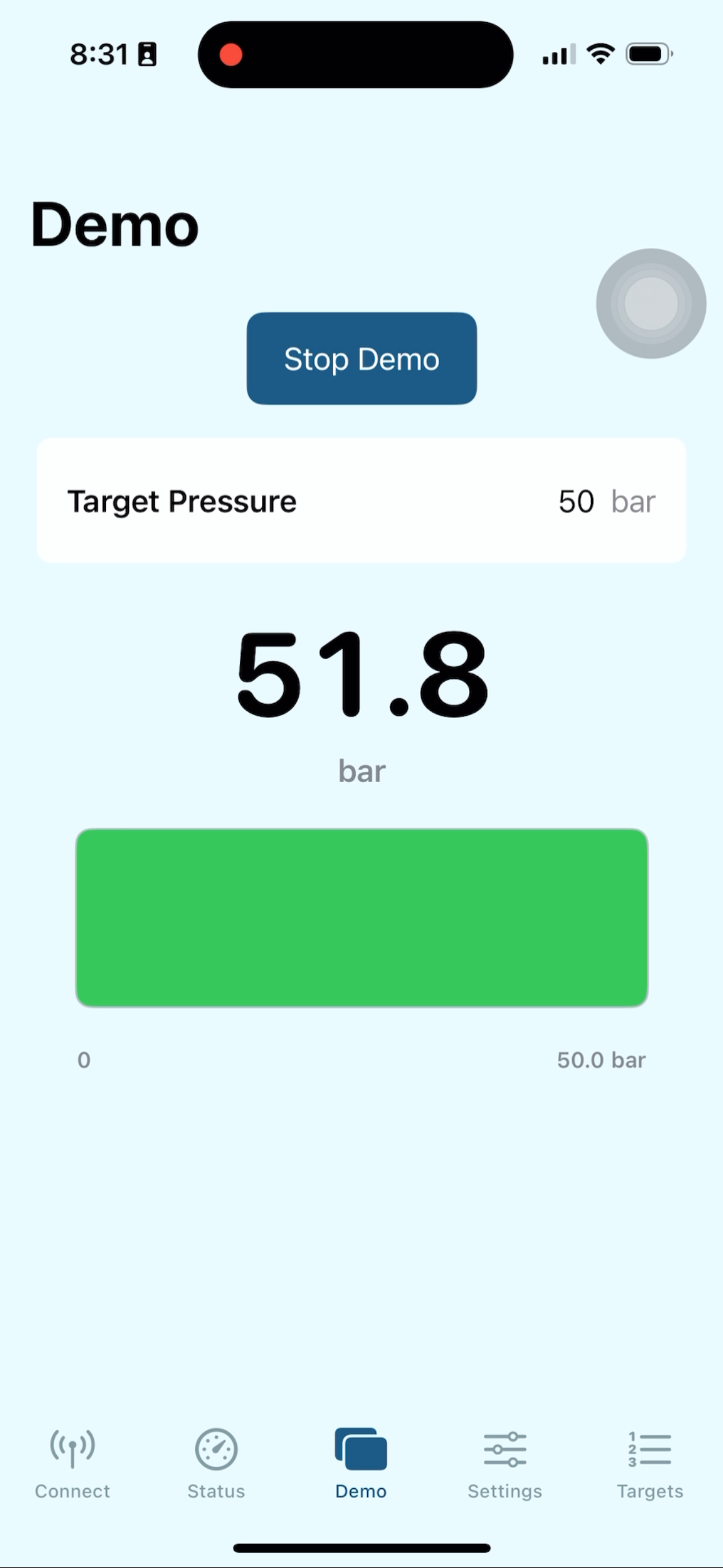
Always aim for the green flash. Brake harder if the green target never appears; reduce pressure when the bar turns red.
An integrated platform
Each layer was developed around the same constraint: turn complex telemetry into feedback a driver and coach can use immediately.
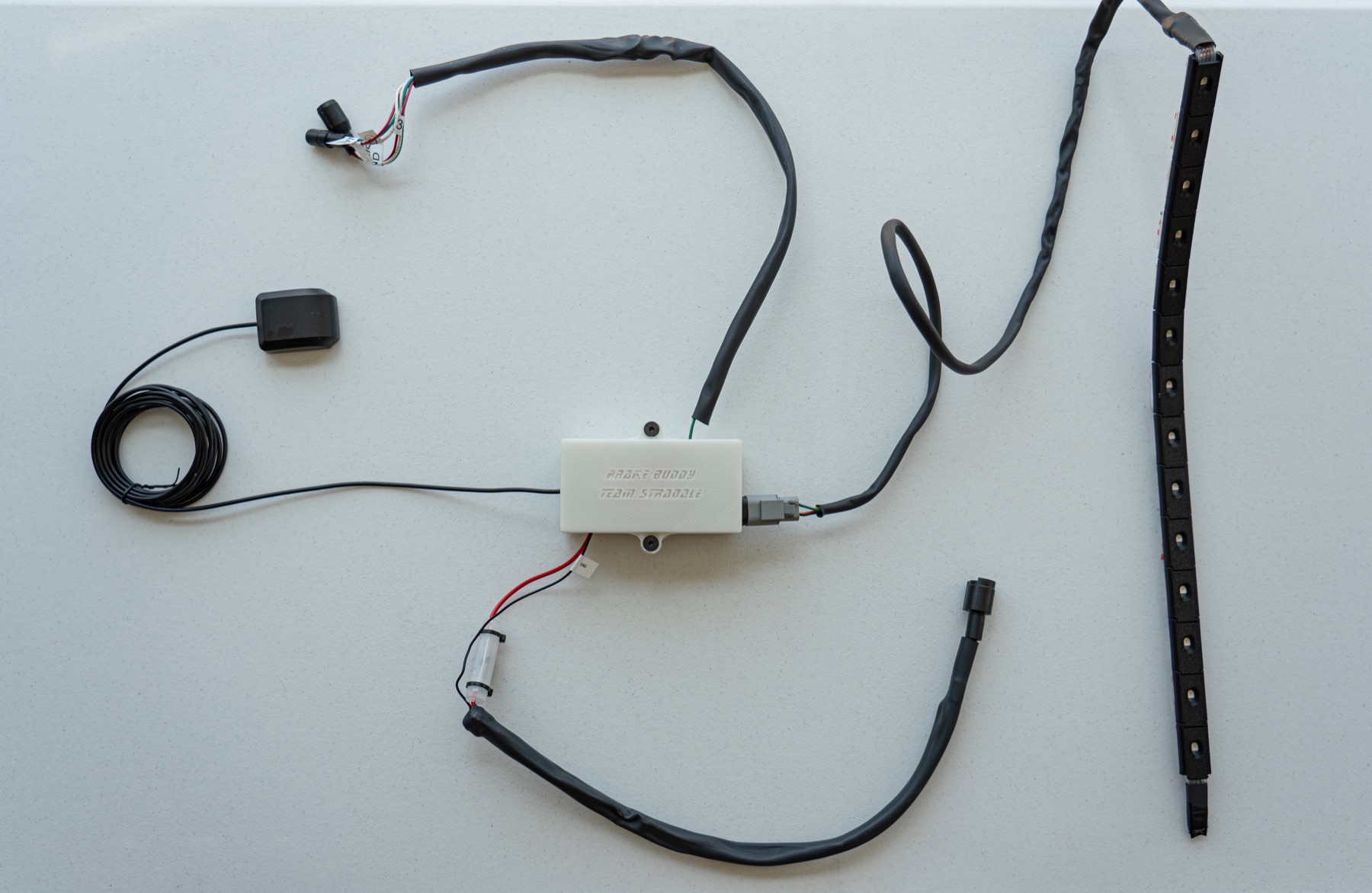
An ESP32-S3-based unit integrates signal conditioning, regulated automotive power, GNSS, BLE, persistent configuration, and local data logging inside a track-tested installation.
The iPhone app communicates with the embedded unit over BLE, giving the coach control over track selection, global and corner targets, driver profiles, LED behavior, and a live pressure demonstration.
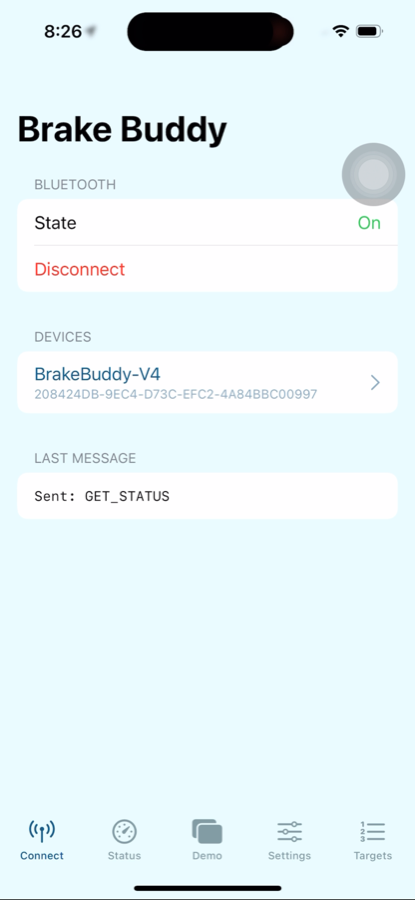
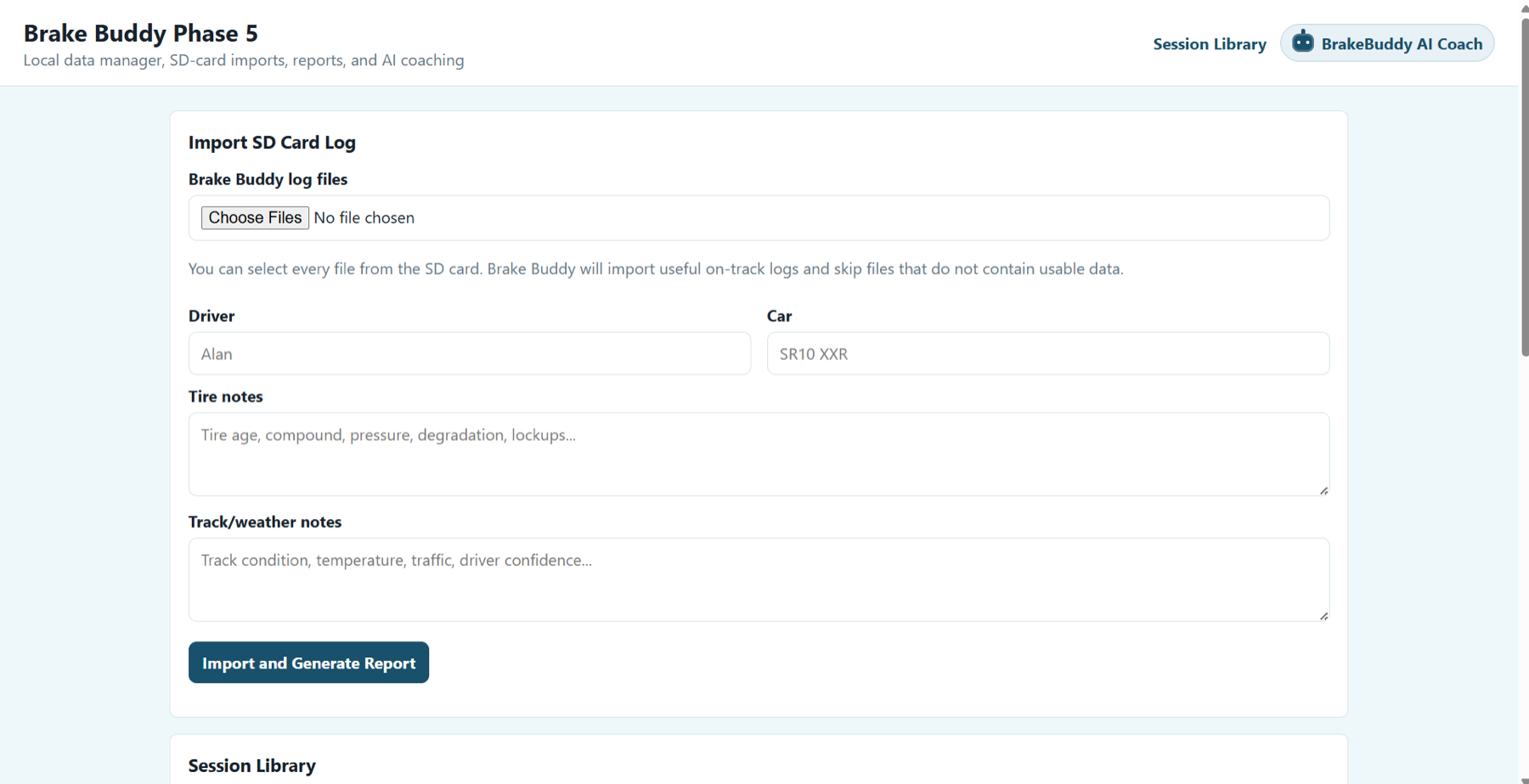
The local Brake Buddy web app accepts every file from the SD card in one pass. It filters out unusable logs, imports the meaningful on-track sessions, attaches driver and car context, and automatically generates the reports worth reviewing.
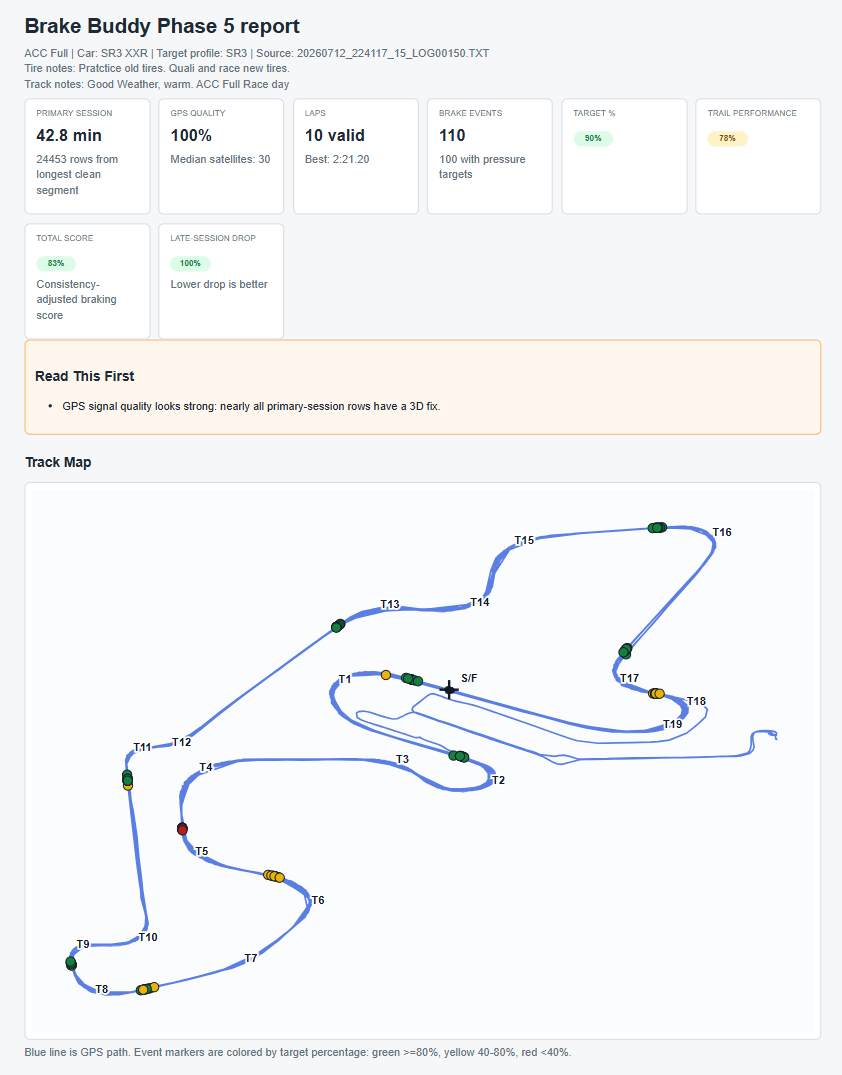
Each usable session becomes an automatic, browser-based report. Brake Buddy detects laps and braking events, maps them to the circuit, and turns raw pressure traces into a review a driver and coach can discuss immediately.
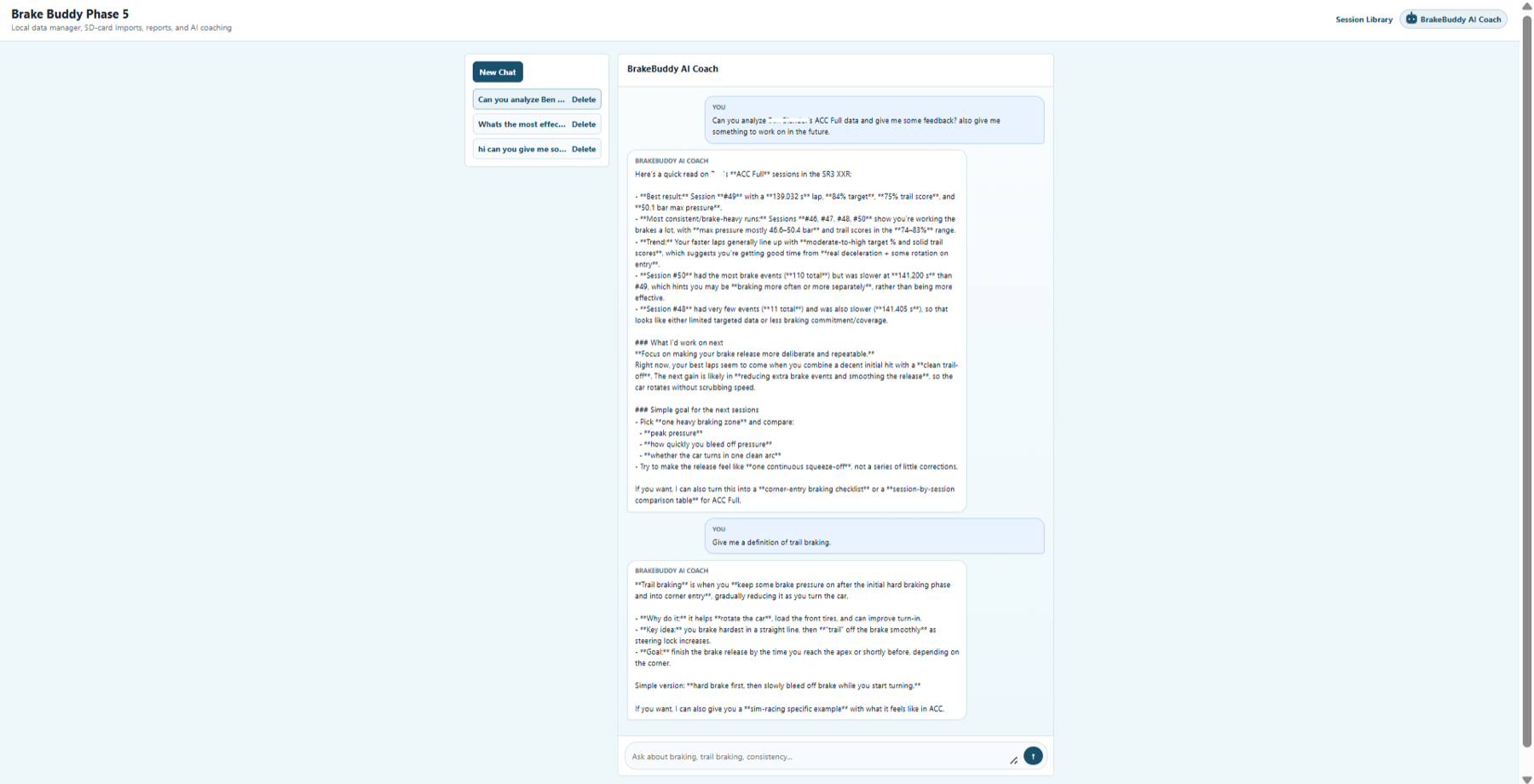
The AI coach can compare selected sessions, surface repeatable strengths and weaknesses, explain techniques such as trail braking, and translate the report into a focused objective for the next run. Driver history keeps the conversation connected across sessions.
AI coaching is decision support—not a replacement for a human coach or a claim of autonomous instruction.
Driver feedback
Selected comments from track testing, anonymized for this portfolio.
“I think this is going to be so beneficial to coaching”
“It works great, it is there when I want it, when i don’t need it, it hides well and is not distracting.”
“This helps you get consistent on braking”
“It feels so much easier to quantify brake pressure in color and brightness”
Product film
Follow Brake Buddy through its hardware, live LED feedback, GNSS context, mobile control, automated reports, and AI coach.
Validation, not just assembly
Brake Buddy has progressed from a bench prototype to an end-to-end system used during real track sessions. The current prototype has been evaluated by multiple drivers and coaches.
Development journey
The system grew through track feedback and engineering constraints—not a predefined feature checklist.
Vehicle-safe signal acquisition, conditioning, and calibration against AiM telemetry.
Progressive LED behavior, target windows, over-pressure alerts, and reliable SD logging.
GNSS track identification, lap detection, brake zones, and corner-specific targets.
A BLE iPhone workflow for track setup, pressure profiles, LED settings, and live demo.
Local session management, automated reports, driver history, and session-aware coaching.
Engineering depth
The project required mechanical judgment, automotive electrical integration, embedded software, geospatial logic, data analysis, and human-machine interaction to work as one dependable system.
Engineering ownership
I independently developed Brake Buddy from the original driver problem through vehicle integration, embedded firmware, track mapping, mobile workflow, reporting, and product direction. AI development tools were used as engineering assistants throughout the process.
About the builder
Mechanical engineer · Motorsport engineer · Physical-AI builder
Purdue University Mechanical Engineering graduate and motorsport engineer at Team Stradale. My work combines race-car data analysis, mechanical design, embedded systems, software automation, and driver-performance engineering.
I am interested in graduate study at the intersection of robotics, intelligent vehicles, cyber-physical systems, and human-machine interaction.
Photography is my way of staying curious about light, motion, and people. See my photography at alanpiao.com